Water Go
MicroSurgeStrategy
4.911.00 Reviews
- Version
- 1.0.2
- Installs
- 10.00K
- Age Rating
- Everyone
Screenshots
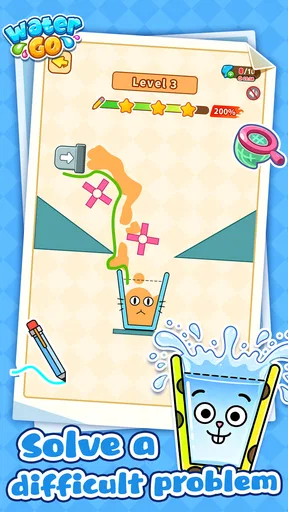
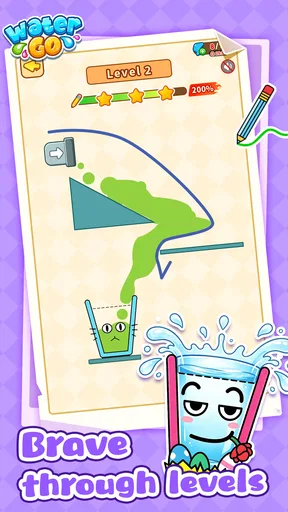
Our Review of Water Go
 Analysis by Appyee
Water Go caught my attention because its central idea is unusually direct: I draw, I make a move, and I try to turn that action into progress. After spending time with it, I found a small strategy game that is easy to understand within minutes but more interesting when I stop treating every drawing as a quick gesture and start thinking about placement, timing, and repeatable habits. It is free, rated for Everyone, and developed by MicroSurge, so it is clearly aiming for a broad audience rather than a niche group of competitive players.
The first impression is helped by the short store description, “Water Go,” and the more playful summary, “Draw to play, play to earn!” Those phrases give you the basic direction without overexplaining it. The game wants drawing to be the main way you interact with the strategy layer. That makes it a natural fit for short sessions, especially when I want something more active than tapping through menus but less demanding than a full-scale strategy title.
What the first week feels like
During the first few sessions, the appeal comes from the low barrier to entry. I do not need to learn a long list of commands before trying the central interaction. Drawing feels more immediate than selecting from several tiny buttons, and it gives each move a physical quality that ordinary menu-driven strategy games often lack. Even when the decision itself is simple, the act of making it keeps my attention on the screen.
That simplicity is also the reason Water Go works well as a casual strategy game. I can open it while waiting for an appointment, play for a short stretch, and leave without feeling that I have abandoned a complicated campaign. It does not ask me to remember a large rulebook before I can enjoy the first attempt. For a younger player or someone who normally avoids strategy games, that approachable structure is a real advantage.
My most useful early discovery was that drawing quickly is not always the best approach. A rushed line may complete the immediate action, but pausing briefly to consider where the gesture begins and ends makes the game feel more deliberate. I started treating each drawing as a small planning problem rather than a simple input. That change made the experience more satisfying without requiring a difficult learning curve.
There is a nice difference between learning the control and learning to use it well. The first part is almost effortless. The second depends on whether I pay attention to the result of each move. Players who enjoy experimenting will probably get more from Water Go than people who only want to repeat the fastest possible gesture. The game’s strongest early quality is that it gives a familiar action—drawing on a screen—a strategic purpose.
The “play to earn” wording also creates an expectation that actions should lead to some form of reward or progress. In practice, I found the motivation strongest when I focused on improving my decisions rather than assuming every session would feel like a major achievement. That distinction matters. If you enjoy small, repeated goals, the loop can be inviting. If you expect a deep reward economy or a large competitive structure, the straightforward design may feel lighter than anticipated.
Because the game is free, it is easy to try without making a financial commitment. That suits the first-week experience: install it, test the drawing interaction, and decide whether the rhythm fits your taste. The current version is 1.0.2, and the overall presentation feels like something to approach with curiosity rather than as a massive strategy platform that must replace every other game on your phone.
Why the drawing mechanic matters
Drawing is not just decoration here. It changes how I read the board or play area because I am thinking about a path, shape, or direction instead of only choosing a command. That makes the game feel more tactile than a typical turn-based strategy app. It also means that hand control can become part of the experience. A player who prefers precise, calm inputs may enjoy it more than someone who dislikes gestures or finds them inconsistent.
A practical tip is to use the first attempts as observation rounds. Rather than trying to maximize every outcome immediately, I watch what the game accepts, how much freedom the drawing gives me, and which kinds of gestures produce the most useful results. This approach reduces frustration and reveals whether the strategy is genuinely engaging for me or whether the novelty comes only from drawing on the screen.
Another useful habit is to avoid playing every session in exactly the same way. I get more value when I test a safer approach one time and a more ambitious one later, then compare the results. That turns a short game into a small personal experiment. It is a modest form of depth, but it is more meaningful than simply repeating a winning motion without understanding why it works.
Does it have value after the novelty fades?
The harder question is not whether Water Go is fun during the first week. It is whether the interaction remains worth returning to once drawing no longer feels new. My answer is qualified: it can earn a regular place for players who enjoy compact decision-making, but it is unlikely to satisfy someone looking for a large amount of strategic variety or a long narrative journey.
The month-to-month value depends on the player’s preferred rhythm. I can imagine returning to it as a daily mental warm-up, a short break between tasks, or a lightweight game to play when I do not want to commit to a long session. Its strength is repeatability through convenience. I do not need to prepare for a session, remember a complicated storyline, or set aside a large block of time.
That convenience does not automatically create lasting depth. A drawing mechanic can remain pleasant, but it needs changing decisions or personal goals to avoid becoming routine. I found that the game stays more interesting when I set a purpose for a session: improve consistency, try a different route, or see whether a slower approach produces a better result. Without that kind of intention, the loop can begin to feel like the same gesture repeated for its own sake.
This is where Water Go differs from the usual alternatives in the strategy category. Larger strategy games generally offer more systems, more units, more maps, or more long-term planning. They can provide richer progression, but they also demand more time and attention. Water Go trades breadth for immediacy. Compared with a puzzle game, it adds a sense of planning; compared with a full strategy game, it removes much of the management overhead.
I would choose it over a conventional strategy title when I have only a few minutes and want to make decisions with my hands rather than read through several panels. I would choose a deeper alternative when I want a campaign, extensive customization, or a strategic problem that develops over a long session. Neither choice is universally better. Water Go is appealing precisely because it does not try to carry the weight of a large strategy game.
Its audience reach is reflected in the store figures: it has an average rating of 4.9 from around 9K ratings, with 10K+ installs. Those numbers suggest that the simple concept has connected with early players, although they should not be mistaken for proof that every user will find unlimited long-term variety. I read them as a sign that the basic loop is easy to appreciate, not as a guarantee that it will become a permanent favorite.
Who will keep coming back?
I think Water Go is best suited to players who like short strategic choices, gesture-based controls, and games that can fit around ordinary routines. It is also a sensible option for families looking for an Everyone-rated title with an uncomplicated premise. Someone who enjoys testing small improvements may find a reason to return even after the first excitement has passed.
A realistic use case is a commute or lunch break. I can play a few rounds, put the phone away when my break ends, and return later without needing to reconstruct a complicated plan. That makes it more practical than a strategy game that punishes interruption. The same quality helps when I am tired: there is enough decision-making to keep the session active, but not so much administration that it becomes work.
I would be less likely to recommend it to players who want a strong social layer, a detailed world, or a deep competitive ladder. I would also skip it if drawing on a touchscreen feels less comfortable than tapping clear controls. The central mechanic is the reason to try the game, but it is also the main filter. If the gesture itself does not feel satisfying, the rest of the experience may not provide enough compensation.
Maintenance, repetition, and everyday friction
Water Go has a low maintenance burden in the practical sense. It is free, its age rating is Everyone, and the minimum operating system is Android 6.0, which makes it accessible to a wide range of Android users. I do not need to organize a large collection of resources or maintain a complicated schedule just to stay current. That makes the game easy to keep installed without demanding much attention.
The more important maintenance is personal. To keep the game from becoming automatic, I need to bring a small goal to each session. That might mean focusing on cleaner drawings, testing a different decision pattern, or simply playing for relaxation rather than chasing an ideal result. This is not a formal feature I can switch on; it is the habit that preserves the game’s value for me.
One trade-off is that the same accessibility that makes Water Go welcoming can also limit its staying power. There is comfort in knowing what kind of experience I am opening, but predictability can become fatigue when I am not in the mood for another compact drawing challenge. I found it useful to alternate it with a more substantial game instead of expecting it to provide every kind of entertainment.
The main source of fatigue is repetition without reflection. If I use the same gesture and pursue the same outcome every time, the interaction loses its freshness. The solution is not to force longer sessions. In fact, shorter sessions work better because they preserve the game’s role as a quick strategic diversion. Playing until the mechanic feels exhausted is more likely to reduce my desire to return.
Another point of friction is the gap between physical drawing and strategic intention. A player may know what they want to do but produce a less effective gesture than expected. That can be satisfying when it encourages improvement, but irritating when the input feels like the obstacle rather than the strategy. I recommend trying the game with a relaxed hand and paying attention to consistency before deciding whether the control style suits you.
There is also a psychological trade-off in the reward-focused wording. Progress can make a session feel purposeful, but it can also encourage me to repeat actions after the fun has ended. I get the best experience when rewards support the play instead of becoming the only reason to open the game. If the earning aspect becomes a chore, the game’s strongest quality—its quick, tactile interaction—gets buried under routine.
Small habits that improve the experience
I found three habits particularly useful. First, I slow down during the opening attempts of a session and use them to read the situation rather than immediately chasing the best result. Second, I change one decision at a time, which makes it easier to understand whether a different drawing or timing actually helped. Third, I stop while the game still feels pleasant. That last habit sounds obvious, but it protects a short-session game from turning into a repetitive obligation.
It also helps to separate accuracy from strategy. A poor outcome may come from an unhelpful plan, an imprecise gesture, or both. Treating those as separate questions gives me a clearer way to improve. I first ask whether the idea was sound, then whether I executed the drawing cleanly. This approach makes setbacks informative instead of simply annoying.
For younger players, I would frame the game as a chance to experiment rather than as a race to maximize rewards. The Everyone rating supports its broad accessibility, but an adult can still make the experience more useful by encouraging discussion about why one drawing worked better than another. That turns a few minutes of play into a simple lesson in planning and cause and effect.
My long-term verdict on Water Go
After looking beyond the first impression, I see Water Go as a focused casual strategy game rather than a complete replacement for larger titles. Its best idea is the connection between drawing and decision-making. That interaction gives short sessions a little more personality than ordinary tapping games, and the free entry point makes experimentation easy.
Its lasting value comes from how comfortably it fits into a routine. I can use it as a brief mental reset, a low-pressure game for spare minutes, or a place to practice making small choices without managing a huge system. The game earns that role when I keep sessions intentional and accept that its appeal is compact rather than expansive.
The limitations are equally clear. Repetition can arrive if I play without a personal goal, and players seeking deep campaigns or extensive strategic variety will probably outgrow it. The drawing mechanic will not appeal to everyone, especially people who prefer fixed controls and highly predictable inputs. Those are not minor details; they determine whether the game feels pleasantly simple or too narrow.
MicroSurge has made something approachable, tactile, and easy to revisit. I would recommend it to a friend who wants a free strategy game that can be understood quickly and enjoyed in short bursts. I would not recommend installing it as the only strategy game on a phone. Its real strength is repeatable convenience with just enough thought to make a quick session feel worthwhile.
For me, Water Go earns a place when I treat it as a small daily activity rather than an endless progression project. The novelty of drawing may fade, but the habit can remain if I use the mechanic thoughtfully, vary my approach, and stop before repetition takes over. That is a modest promise, yet it is an honest one—and for this kind of game, modest usefulness can be more valuable than ambitious features that demand constant maintenance.
Verdict
Strengths of Water Go
- Simple water-tracking interface that is easy to understand
- Custom reminders help build a consistent hydration routine
- Daily intake goals can be adjusted to personal needs
- Quick logging makes recording glasses fast and convenient
- Useful progress view shows how close you are to your goal
Limitations of Water Go
- Reminder frequency may feel excessive for some users
- Accuracy depends on consistently logging every drink
- Limited value for users who already track hydration elsewhere
- Some features may require permissions or paid access
- Hydration goals may not account for all medical conditions
Similar Picks in This Category
View All
Clash of Clans
Supercell4.5

Plants vs. Zombies™
ELECTRONIC ARTS3.7

Lords Mobile: Kingdom Wars
IGG.COM4.5

Clash Royale
Supercell4.4

State.io — Conquer the World
CASUAL AZUR GAMES4.1

Car Driving School : Car Games
Spark Game Studios3.9
Frequently Asked Questions
What is Water Go, and how does it help with daily hydration?
Water Go is a hydration reminder app designed to help you drink water more consistently throughout the day. After entering details such as your body information, activity level, and daily routine, the app can estimate a suitable water target and send reminders. It is useful for people who often forget to drink, although its recommendations should be treated as general guidance rather than medical advice.
How does Water Go calculate my recommended water intake?
Water Go generally bases its suggested intake on information such as your weight, age, activity level, climate, and personal preferences, depending on the version you install. You may also be able to adjust the target manually if the automatic recommendation does not match your routine. Because hydration needs vary considerably, users with medical conditions should confirm appropriate intake with a healthcare professional.
Can I customize reminders and record drinks other than water?
The app is intended to make hydration tracking flexible, so users can usually choose reminder intervals, set waking and sleeping hours, and record the amount they drink. Some versions may also include different beverage types or container sizes, making logging faster. Before downloading, check the current feature list because customization options can differ between Android and iOS releases.
Does Water Go work without an internet connection?
Water Go can generally be used for basic logging and scheduled reminders without requiring a constant internet connection, since these functions can operate locally on the device. However, features such as account synchronization, cloud backup, advertisements, analytics, or subscription verification may require connectivity. If offline access is important to you, review the app’s permissions and store description before installation.
Is Water Go free to download, and does it contain ads or in-app purchases?
Water Go may be available as a free download, but the exact business model can vary by platform and app version. Free editions may include advertising, optional purchases, premium tracking tools, or subscription features. We recommend checking the Google Play Store or Apple App Store listing for the latest pricing, available plans, and whether deleting ads or unlocking advanced functions requires payment.
Play our best games!


